CNC vertical machining centers (VMC)
CNC vertical machining centers feature 3–5 axes, automatic tool changers, and table sizes ranging from 600×300 to 1700×800 mm. They are used for milling, drilling, boring, threading, and complex contouring in mechanical engineering, mold & die, aerospace, and automotive industries.
Vertical machining center DV-600
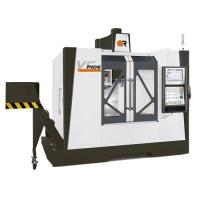
Vertical CNC machining center Vcenter-P106
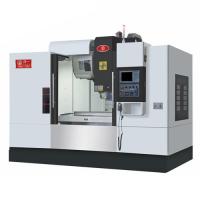
Vertical machining center DV-800
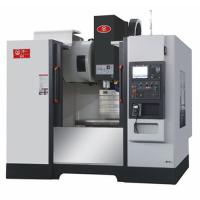
Vertical machining center DV-1000
Vertical CNC machining center VMC1160
Vertical machining center VDLS1200
Vertical CNC machining center VMC-1165
Vertical CNC machining center VMC850Q
Vertical CNC machining center VMC1000Q
Filters
Filters
01 Brand
02 Price
03 CNC
04 Spindle taper
05 Tool magazine capacity
06 Feed travels - Longitidinal feed travel
07 Max. tool diameter - adjacent pots are empty
08 Max. tool lenght
09 Max. speed of traverse feeds - X-axis
10 Max. tool weight
11 Max. weight of workpiece
12 Spindle motor power - Nominal power
13 Voltage
14 Distance from vertical spindle nose to surface of working table
15 Working table size - Length
16 T-slots - T-slots number
17 Rapid traverse - X-axis
18 Feed travels - Сross feed travel
19 Max. tool diameter - adjacent pots are busy
20 Max. speed of traverse feeds - Y-axis
Description
The vertical machining centers (VMC) refer to the machining centers with the spindle in the vertical state and they are the majority of all CNC milling machinery. Vertical milling centers are suitable for processing discs, sleeves, plate parts, molds and dies. VMCs can be utilized for cutting, drilling, carving, engraving, tapping, countersinking, chamfering and other applications. Vertical machining center is easy to operate and to observe the process, easy to install and debug.
Main components:
- Spindle — can hold a variety of cutting tools, perpendicular to the working table. The spindle block is mounted in a housing that moved up and down (Z-Axis).
- Table — rectangular platform without indexing rotation function on which to mount workpieces—either directly or through a variety of fixtures (like vises). The table has a motion of left and right directions (X-Axis), and front to back, (Y-Axis). A coordinate axis and a rotary table that rotates along the horizontal axis can be mounted on the worktable to machine spiral parts.
- Automatic Tool Changer (ATC) — A tool changer greatly increases CNC milling center's c productivity by allowing for the automatic, computer-controlled selection of tools for a variety of tasks from rough cutting to fine hole boring.
- Coolant System — for keeping parts and cutters cool and lubricated. Usually it is a mix of soluble oil and water.
- Chip conveyor — using to remove the chips from the work zone.
- Full Covers/Enclosures— added to decrease the splash caused by milling works and protect the operator.
- Rotating Tables — additional Axes to the machine can greatly increase its productivity by turning of workpiece.
Advantages:
- Relatively low price.
- Ease of use.
- Much machinists are familiar with the CNC vertical milling technology.
- Requires not much floor space.